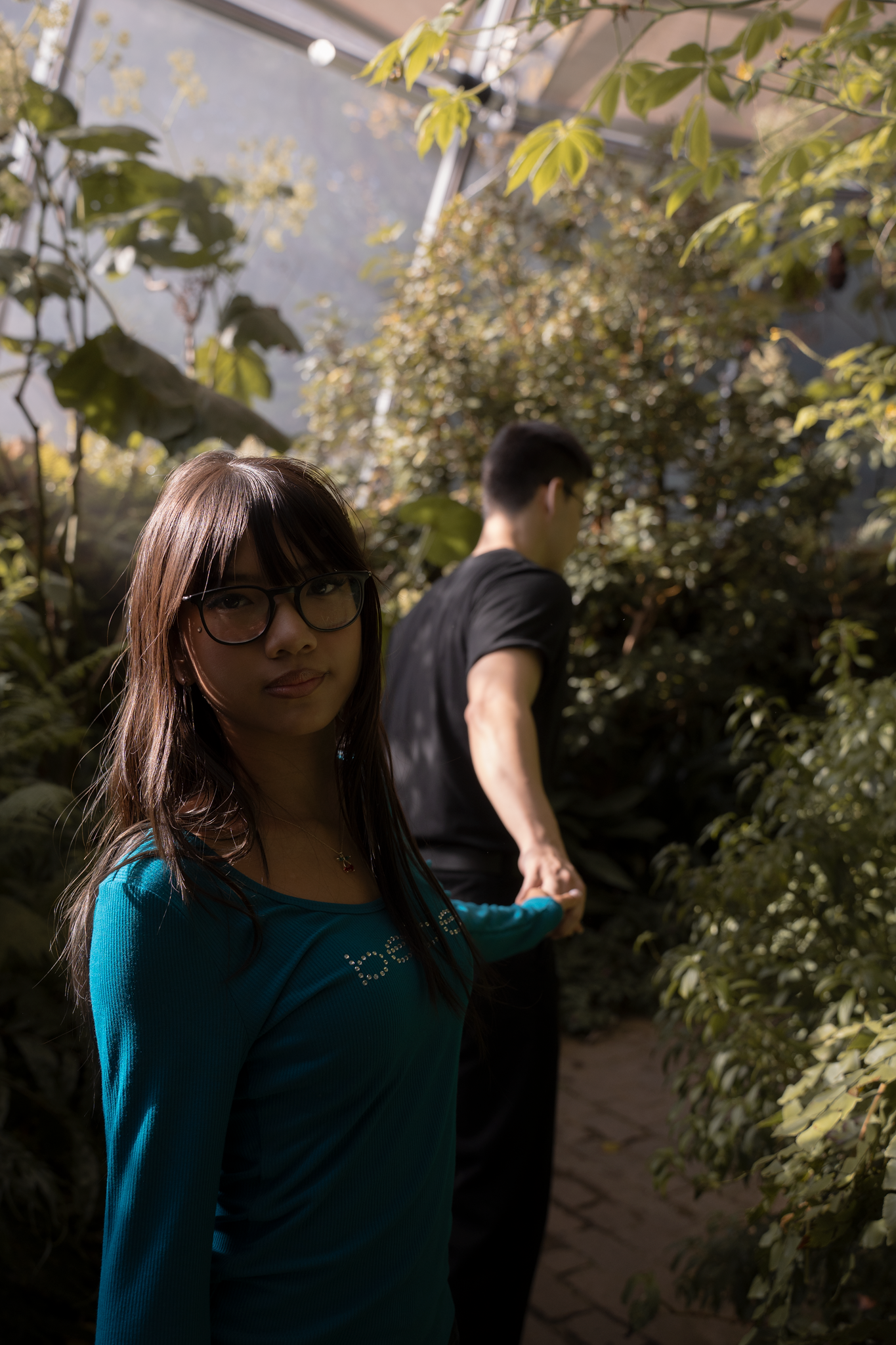
There is a specific posture people fall into the moment they know a camera is somewhere in the room. Shoulders square. Chin lifts half an inch too high. A hand finds something to hold — a phone, a strap, the edge of a sleeve — because empty hands feel like evidence of nothing to do.
I photographed a woman standing against a wall once, her phone lit against her palm, her whole body angled slightly away from where I stood. She wasn't posing, exactly. She wasn't not posing either. She was in that strange middle country most people occupy for the first ten, fifteen, sometimes forty minutes of being photographed — aware of the lens the way you're aware of a mirror in a fitting room. Not looking at it. Unable to stop knowing it's there.
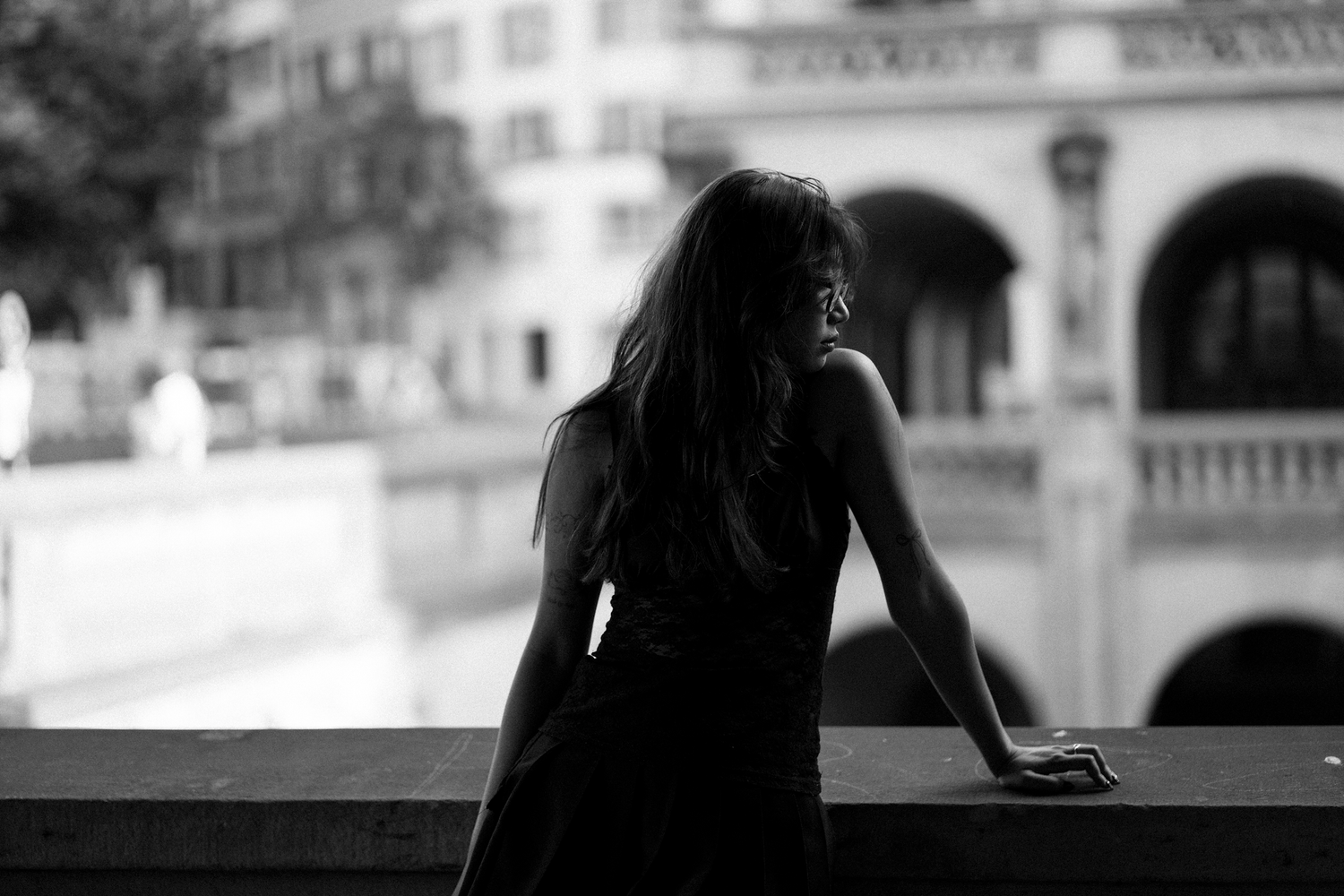
For years my instinct was to get people past that stage as fast as I could. Now I think the better move is closer to just... waiting it out. Sitting with someone in the self-consciousness instead of coaching them out of it, because coaching is its own kind of performance — a new set of instructions swapped in for the old ones. What I actually want isn't a person following instructions well. It's the ten seconds after they've forgotten there were instructions at all.
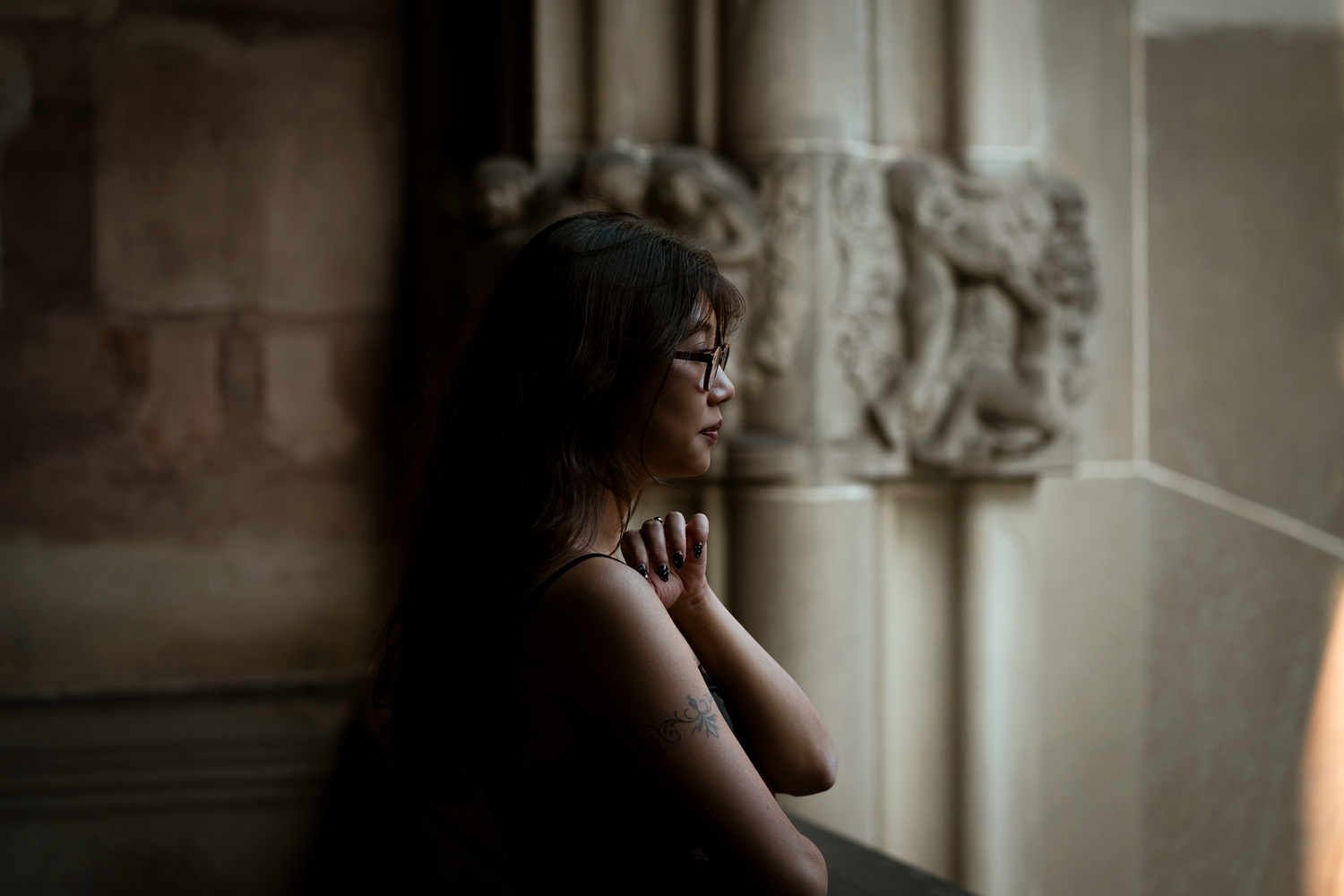
That shift rarely announces itself. It isn't dramatic. Mostly it looks like someone's attention finally landing on something that has nothing to do with me. A window. A conversation across the room. Light doing something interesting on a wall nobody planned to notice. In one frame, she'd turned toward a window, and whatever she was looking at out there had stopped being about the session. Her jaw had softened. Her hands had stopped needing a job.
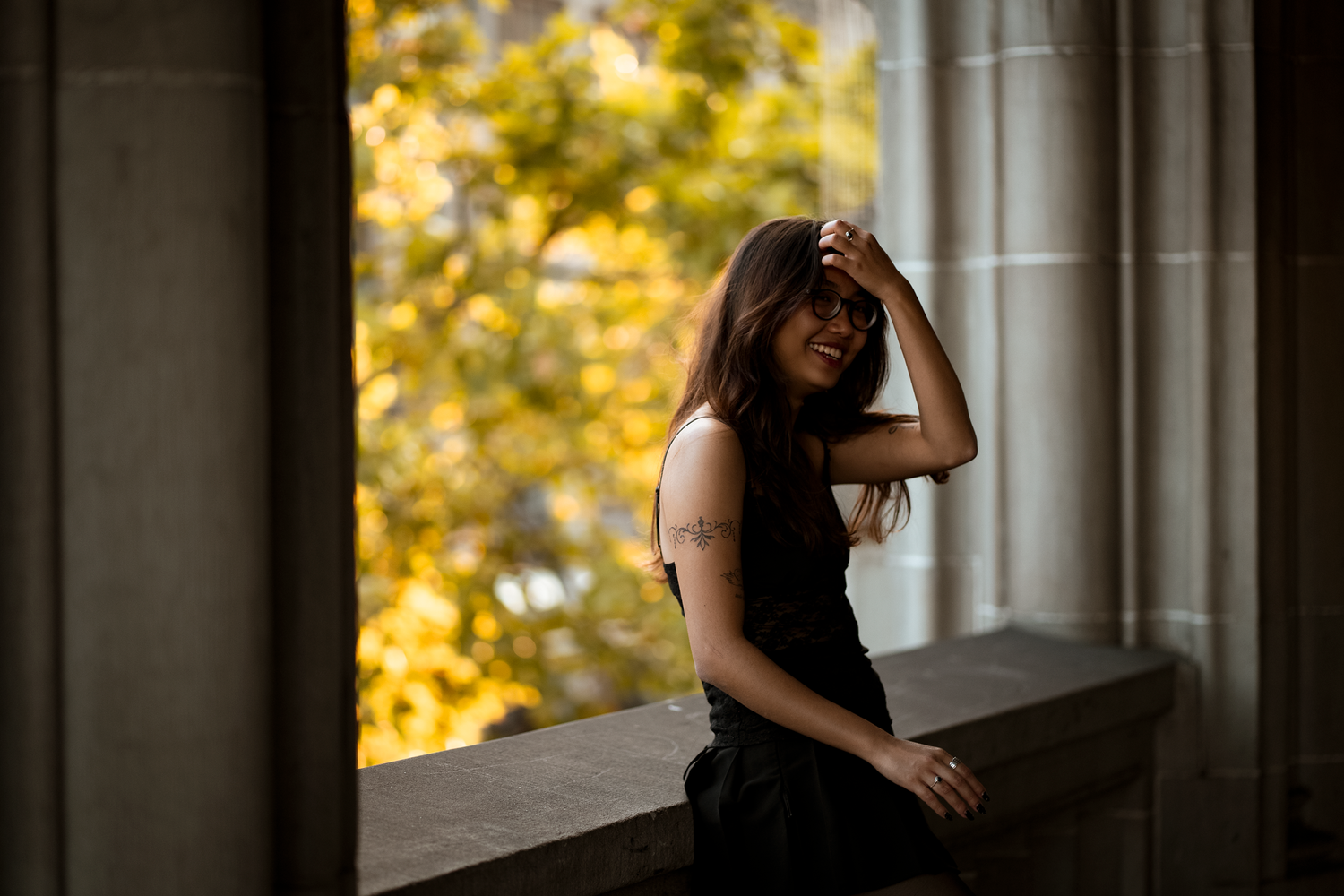
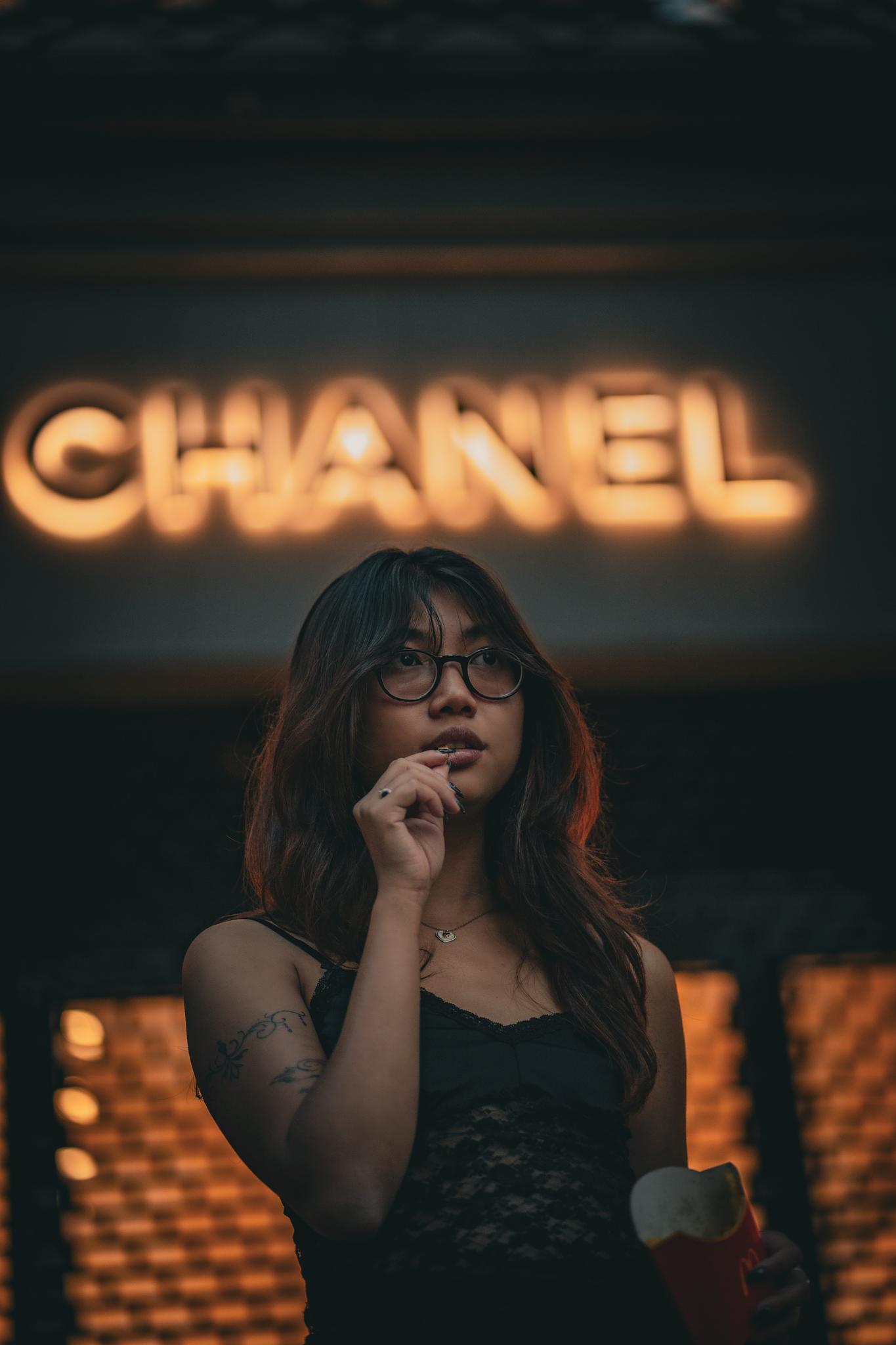
Here’s what I’ve learned about that in-between country of self-consciousness: nobody stays there once they’re genuinely distracted. The trick, if there is one, isn’t a pose or a prompt — it’s finding, or more often just waiting for, whatever pulls someone’s attention fully outside of being watched. A joke that actually lands. A song playing somewhere. Hunger, even. Later that same afternoon, standing under a lit-up Chanel sign, she was eating a french fry and looking at something off to the side that made her laugh with her mouth still half full. Nobody told her to stand there. Nobody told her to eat, or to look wherever she was looking. I don’t even remember what caught her eye. I just remember that by then I’d been three feet away with a camera for two hours, and she’d stopped filing that information anywhere useful.
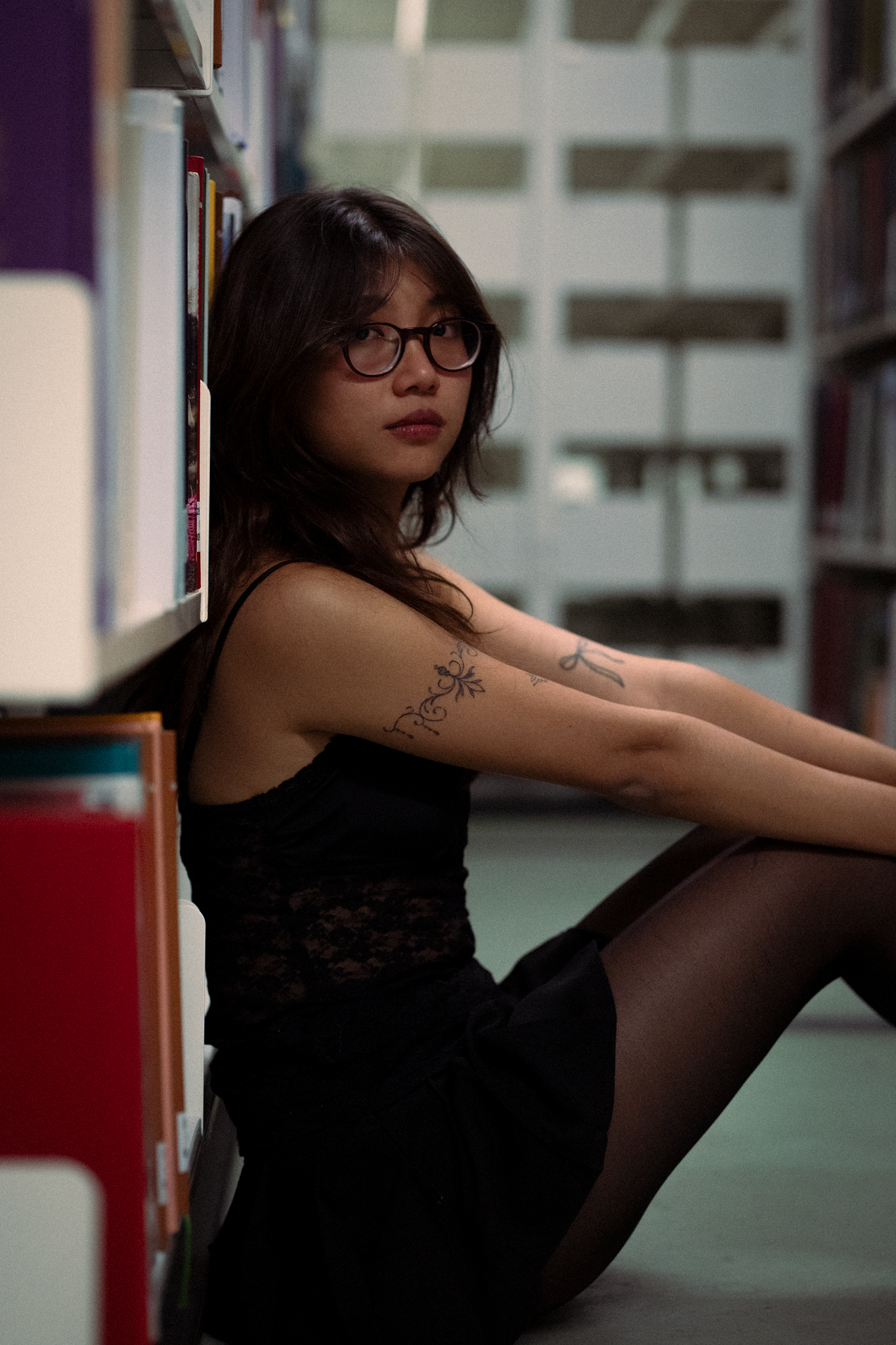
This part of the work has almost nothing to do with photography, and somehow everything to do with it. Anyone can learn to operate a camera. What takes longer — what I’d argue is the actual craft — is learning to become uninteresting enough, quickly enough, that a person stops managing themselves in front of you. I stay close. I move with the day instead of directing it. I don’t say “look natural,” because there’s no instruction more likely to produce the opposite.
Maybe you’re already dreading being in front of a camera. Maybe you’ve spent time picturing yourself stiff and overly aware in every frame. If so, I’d guess you’re picturing the phone-against-the-wall version of yourself — the fifteen-minutes-in version.
Almost nobody’s photographs actually look like that by the end, not because the awkwardness doesn’t happen, but because it doesn’t last. Give it long enough, give me long enough to turn into background noise, and you get to the french-fry version instead. The one where you’ve forgotten someone thirty feet away is holding a lens, because something funnier or warmer or hungrier than that has your attention now.
That’s the version I’m actually after — for you, not just for the photographs. A free discovery call costs twenty minutes, and it usually starts with the same question: how did the two of you meet?